
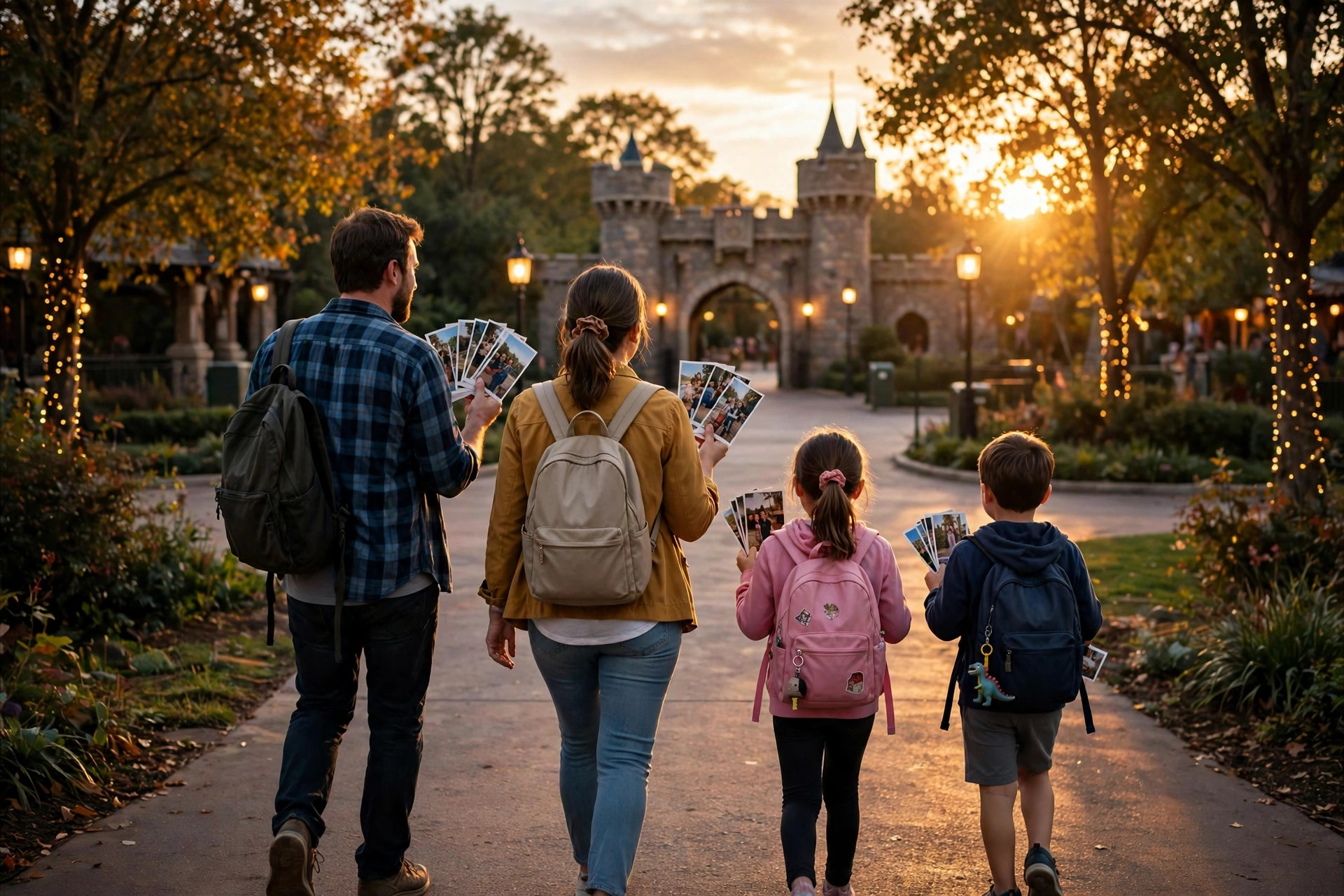

In almost any business, a sale is considered finished when the customer leaves. The ticket was paid, the service delivered, and the counter is free for the next person. In tourism the same thing happens, with one important difference: the customer does not take the product home in a bag, they take home a memory. And that memory, if nobody looks after it in the hours that follow, cools down, gets lost among other photos on their phone, or becomes a review that was never written. Understanding that after-sales is a second sale — not a goodbye email — is what separates a park that sells once from one that sells twice to the same visitor, and gets that visitor to bring someone else.
The second sale is cheaper than the first: why after-sales is worth money
The first reason to look after after-sales is economic, and the sector’s numbers are clear. Keeping a customer costs far less than winning a new one: a guest-loyalty guide for the sector puts the cost of acquiring a new customer at five times the cost of retaining an existing one, and notes that raising retention by just 5% can more than double revenue. Repeat customers also spend more: according to data cited by Rezgo, a returning customer spends around 67% more than a new one over their lifetime, and Yotpo data cited in the same guide puts the gap at close to three times as much. In a park, that is not theory: a visitor who has already been there does not need convincing that the place is worth it, and there is no platform commission to pay for the channel they first arrived through. Every euro, dollar or peso spent on getting them back — or on getting them to buy after they have left — goes further than the same money spent finding someone who has never heard of the park.
The first 24-48 hours: the window in which almost everything is decided
The second reason is timing. The most powerful window for talking to a visitor is not a month later, it is in the 24-48 hours after the visit, while the memory is still fresh and the emotion is still high. Rezgo puts it this way: that is when photos are edited, stories are told, and emotions are still running high. Post-visit email specialists agree on the same window: the best time to send the post-visit email is 24-48 hours after the visit, with a first thank-you and photo message in the 6-12 hours that follow. What goes out in that window should not be a generic newsletter, but something only that visitor can recognise: the ride they enjoyed, the photo taken of them, the show they attended. An email that arrives late, or that treats the visitor as a stranger, wastes after-sales’ only advantage: that the customer already knows you and has already decided they like you.
Photos are the second sale: from memory to revenue after the visit
A park’s most natural after-sales product is the one it already captured during the visit: its photos. The sale does not have to end at the park: after-sales by email lets visitors buy and download digital souvenirs after their visit, keeping the revenue going even after the guest has left. Today’s systems stretch that window further still: photos can be viewed, bought and shared in the app for months after the visit, with personalised reminders for those who have not bought yet. And the email that delivers the photos is not just a receipt: those messages can also be used to promote a second visit, recover a purchase abandoned at the kiosk, and generate repeat business with discount codes. A photo that was not sold at the park is not lost: it is waiting for an email that arrives on time, with the image in front of the visitor and a single button to buy it.
Reviews and recommendations are inventory too: what is lost if nobody asks
After-sales does not only sell photos: it sells someone else’s next visit. A review requested at the right moment, a code to give to a friend, or an invitation to share photos on social media is worth more than another paid ad, because it comes from someone who was actually there. The psychology Rezgo cites explains it: people remember an experience mainly by its most intense moment and by its ending, so the last few minutes of the visit — and the message that arrives afterwards — weigh more than they seem in how the whole day is remembered. That is why the post-visit email should ask for one clear thing: the review, or the photo purchase, or the next booking — not all three at once. And that is also why it should be measured like gate sales are measured: how many people open the photo-delivery email, how many click, and how many come back. An email that delivers photos does not behave like an ordinary newsletter: the visitor wants to see their photos, and that interest is the doorway to everything else.
How to design after-sales: five questions before sending the first email
The question is not whether to write to the visitor afterwards, but whether operations are ready to do it well. Check five things: whether you know who came, what they bought and which photos they have, in a single record, without having to rebuild it across the ticket office, the website and the photo system; whether you have permission to write to them — the email they left when buying, for a clear purpose — and know how long you keep their photos and data; whether your first message arrives in the 24-48 hour window, with their photo and their visit in front of them, and not with a generic offer; whether each message asks for a single action — buy the photos, leave a review, book a return — instead of asking for everything at once; and whether you measure what after-sales sells — photos recovered, reviews gained, repeat visits — and not just how many emails were sent. If any answer is no, the next step is not sending more emails, but tidying up the visit data. The visitor has already left, but their memory, their photo and their recommendation are still in your hands: after-sales is deciding what to do with them before they cool down.